

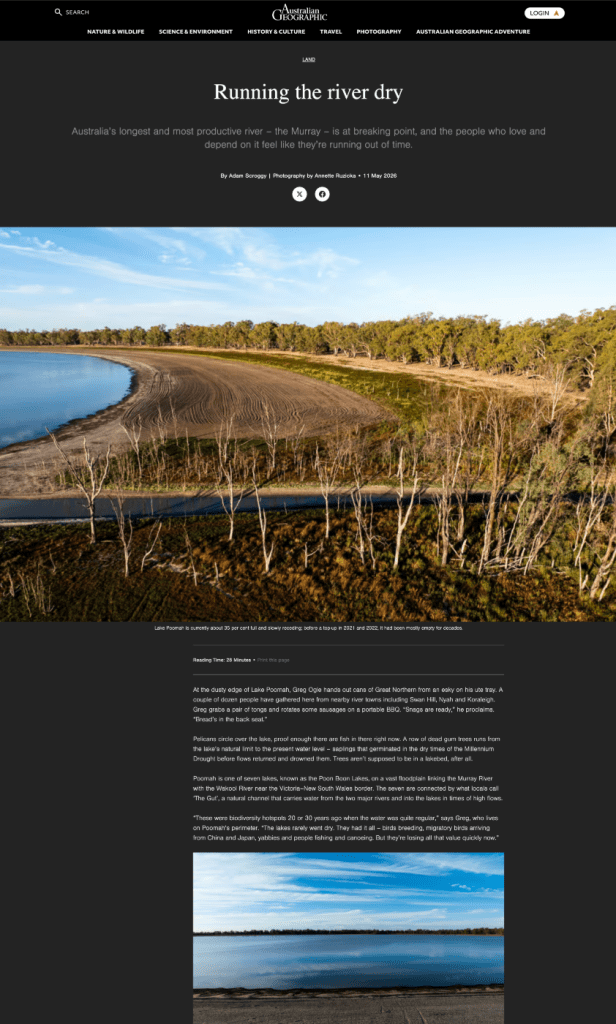
Running the river dry
The Thermal Pollution Workshop was held at Lake Hume, Albury on 18 – 19 June 2001, and those in attendance represented a broad cross-section of interests, stakeholders and professions. Importantly, the workshop bought together a diversity of expertise from scientists to engineers, professionals in water resources, fisheries and conservation management, and people with first hand experience of the thermal pollution problem.
The Way Forward on Weirs was the first conference to address the ecological, engineering, economic and social aspects of reducing the environmental impacts of weirs in Australia. Hosted by the Inland Rivers Network on 18 and 19 August 2000 in Sydney, it was the first large-scale gathering of stakeholders to address the issue. The papers presented here arose from the Conference and address four key themes:
– What are the effects of weirs on the environment?
– How can weir operations be altered to reduce environmental impacts?
– How can weirs be removed or modified? and,
– Thinking laterally about water supply options and management.
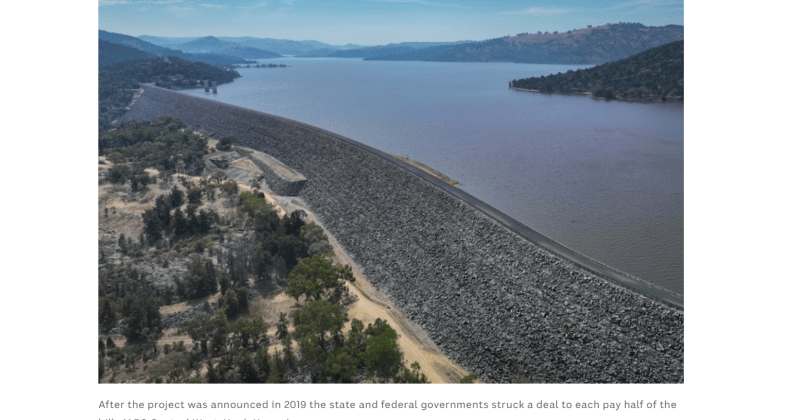
ABC Central West / By Hugh Hogan March 22nd, 2023
Excerpt:
With the state election this weekend, NSW Labor said it needed more details before it could commit to the project.
“We don’t know what it’s going to cost. We don’t know clearly what the benefits are. We don’t know what the environmental impacts are going to be,” Labor water spokesperson Rose Jackson said.
“What Labor is doing is being honest about the processes that we’re going to follow … we haven’t seen the documentation, we haven’t seen the business case so we’re unable to make commitments.”
Not everyone is in support of the project which could have a price tag north of $2 billion.
Bev Smiles from the Inland Rivers Network said the environmental cost, including reduced water for wetlands, was too high.
“It captures the really important floods for the wetlands in the Lachlan Valley that are listed on the national list of important wetlands,” she said.
Ms Smiles said a bigger dam would not have had any effect on last year’s floods as operators were currently required to store as much water as possible for downstream users.
“New South Wales really needs to look closely at its dam management policy both for critical human needs in extreme drought … and the way they currently manage dams to keep them full as much as possible,” she said.
The NSW Coalition government and the local fibre growing industry groups are making a controversial claim – that there is too much water in the Commonwealth’s environmental water accounts in the Wambuul/Macquarie and Gwydir catchments.
So how can the claim be made that these rivers are ‘over-recovered’, when the internationally significant wetlands they contain are rapidly declining?
This is a tale of how the convoluted nature of water management, and the deceitful abuse mathematical formulas and data can score you a big payday, if you’re prepared to stoop that low.
If you think it’s ludicrous to suggest that rivers can be too recovered, then please, read on!
ABC News
February 17, 2023
Parts of regional Australia are experiencing a population boom, but there are concerns some of the fast-growing inland cities are ill-equipped for the next drought.
Some of the communities which ran out of water, or came close, at the height of the last drought are growing impatient for solutions and want water recycling to be among the options.
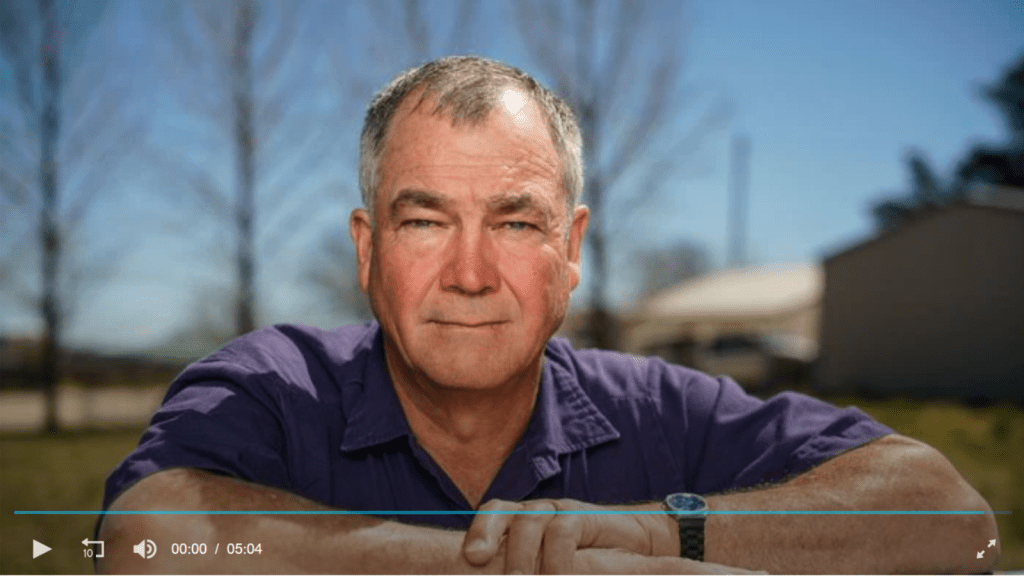
Featured:
Simon Murray, former mayor, Armidale Regional Council
Graham Carter, Tamworth Water Security Alliance
Kevin Anderson, Tamworth MP and NSW Water Minister
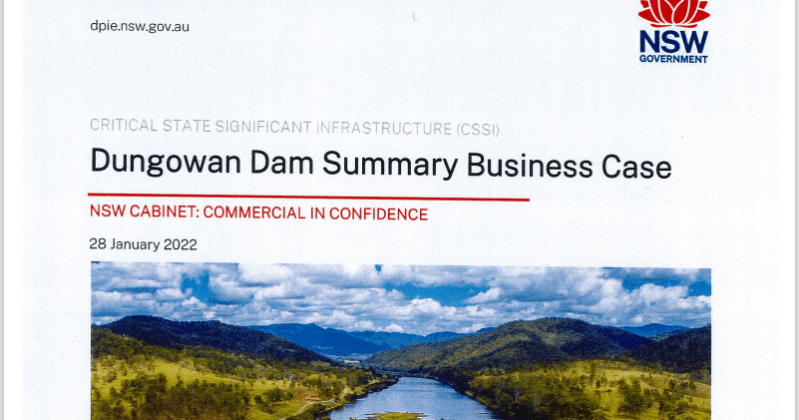
The proposed Dungowan Dam & Pipeline project is a National Party promise for the electorate of Tamworth. It is economically unviable and has been questioned by Infrastructure NSW and the Federal Productivity Commission.
The summary of the final business case passed by NSW Cabinet in March 2022 demonstrates bias and a lack of analysis of alternative options to secure Tamworth water supply under future climate change predictions.
Inland Rivers Network President Beverley Smiles talks to Patrick Bell on ABC New England Monday 28th February 2022.
Questions about the cost of Dungowan dam are being asked by the community – how much will the Dungowan dam cost? Estimates are that it could be as much as $1 billion. That’s very expensive water!
Dams cause a lot of damage to rivers – Inland Rivers Network believes there are a lot better options for supplying long term urban water security for inland cities and towns such as purified recycled water, storm water capture and rain water tanks on every building in town.
The community needs to know – what alternatives have been costed, what cost benefit analysis has been done and what will happen to the price of water for Tamworth residents?
If the Government has nothing to hide, they will release the business case.

Published in the Northern Daily Leader – Tamworth
1st January 2022
Deputy Prime Minister, Barnaby Joyce, seems to be blaming bureaucrats in NSW for delaying the Dungowan Dam (NDL 19 December 2021). He maintains that politicians have said that Dungowan Dam is going to happen and that ‘government is run by the people represented by politicians.’
Has Mr Joyce forgotten that elected governments make laws and bureaucrats are paid to implement those laws?
Large impactful infrastructure, like dams on rivers, must be assessed under state and federal law. In NSW there is the Environment Planning and Assessment Act, Water Management Act, Fisheries Management Act, Biodiversity Conservation Act and at the Commonwealth level there is the Water Act, Murray-Darling Basin Plan, Environment Protection and Biodiversity Conservation Act – to name a few.
In early 2022, construction of the new pipeline between Dungowan village and Calala water treatment works will commence. This is the ‘shovels in the ground’ project that will help to save water and improve Tamworth water security. The process to assess a new dam on the already stressed Peel River must be conducted carefully and consider the many adverse impacts. Meanwhile, less expensive, more sustainable alternatives must be considered to give the best value for public investment.
It is time that the proposed Dungowan Dam stopped being used as a political football during a federal election campaign.
Inland Rivers Network president Bev Smiles


