
The Murray–Darling Basin can be divided into two parts: water in the northern Basin runs that into the Darling River, and water in the southern Basin that runs into the River Murray.
The main rivers in the Southern Basin in NSW are Murray, Murrumbidgee, Lower Darling and Lachlan Rivers while in Victoria are Goulburn, Loddon-Avoca, Wimmera, Ovens and Mitta Mitta.
The southern basin area makes up about half of the total Murray–Darling Basin area. It is home to major irrigated activities including horticulture such as nut and fruit trees, viticulture, and broadacre cropping such as rice and cotton, as well as dairy farming. As such the southern basin is Australia’s most significant water market, accounting for over 85% of total allocation trade and 40% of entitlement trade, by volume nationally.
The region is also home to a rich mosaic of forests and wetlands: a vast estate that consists of river red gum forests, wetlands and floodplains. It includes some of the largest red gum forest on earth including Barmah-Millewa, Gunbower, Koondrook-Perricoota and Werai forests. Internationally significant wetlands such as the Coorong, and Lakes Alexandrina and Albert Wetlands, the Riverland complex, Banrock Station, Hattah-Kulkyne Lakes, Ginini Flats wetlands, Fivebough, Tuckerbil Swamps and Lake Albacutya can also be found in the southern basin.
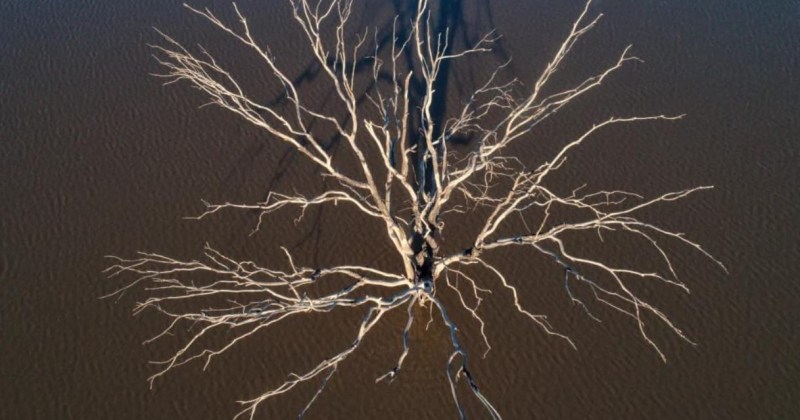
Unfortunately, chronic over-allocation, poor water-sharing rules and failed efficiency schemes have left internationally significant wetlands — including the Coorong, Lower Lakes and the Murrumbidgee River floodplain — increasingly dry and ecologically unstable.
To help address environmental degradation, improve native fish populations, a Southern Connected Basin Environmental Watering Committee was established in 2014. It supports the coordination of the delivery of water for the environment in what is now called the ‘Southern Connected Basin’ and in particular the River Murray system and across multiple environmental water holders and jurisdictions.
Because most of the rivers in the Southern basin have headwaters in alpine country where relatively young peaty soils exist, the rivers in the southern basin typically never cease to flow. The flow is also not as variable as it is in the northern basin; the smallest annual flow is around 30 percent of the long-term mean and the largest around three times the mean. In most cases the flow peaks very strongly with the spring snow melt and troughs in mid-autumn.
The Lower Murray has recently been listed as critically endangered. The Murray-Darling Basin Plan was based on returning 3,200 gigalitres back into the rivers to improve ecosystem health and resilience.
This has not been achieved.

