Growing calls for water recycling in drought-prone regional cities

ABC News

February 17, 2023

Parts of regional Australia are experiencing a population boom, but there are concerns some of the fast-growing inland cities are ill-equipped for the next drought.

Some of the communities which ran out of water, or came close, at the height of the last drought are growing impatient for solutions and want water recycling to be among the options.
More Information

Featured:

Simon Murray, former mayor, Armidale Regional Council
Graham Carter, Tamworth Water Security Alliance 
Kevin Anderson, Tamworth MP and NSW Water Minister
Submission Guide – Floodplain harvesting rules for the Barwon-Darling water sharing plan

Submission Guide: Barwon-Darling Floodplain Harvesting (FPH) Rules

Deadline: Friday 8 July 2022

Email: floodplain.harvesting@dpi.nsw.gov.au

Documents available at: https://www.industry.nsw.gov.au/water/plans-programs/healthy-floodplains-project/water-sharing-plan-rules/barwon-darling

Background

The Barwon-Darling River was identified by the Natural Resources Commission as suffering ecological collapse during recent intense drought conditions. The 2012 Barwon-Darling Water Sharing Plan attributed 16.5 GL (gigalitre = 1 billion litres) to FPH extraction. This volume was used in the development of the Murray-Darling Basin Plan. The proposed new entitlements are above this volume. Extraction from the Barwon-Darling has breached the Basin Plan Sustainable Diversion Limit in 2019 and 2020. The proposed management of FPH in the Barwon-Darling must not lock in individual property history of use.

Key Submission Points (use your own words & additional points)

  1. VOLUME: The volume of FPH to be licensed is estimated to be 51.32 GL (or unit shares), as identified in the Community Assistance Report. This differs greatly from the figures used in the modelled scenarios. There is no confidence in the information provided for FPH assessment or proposed entitlement in the Barwon-Darling River.
  2. Do not support that new FPH licenses will keep extraction below the Plan Limit
  3. Do not support the rainfall runoff exemption – this is free water that must be accounted for
  • ACCOUNTING RULES:
  • Do not support 500% carryover – will cause loss of key flood flows for downstream benefits to wetlands, cultural values, groundwater recharge, basic rights, and town water supply.
  • Support annual accounting with no carryover – there is no rationale for this causing larger entitlements other than faulty policy favoring history of use
  • Support that initial allocation is 1 ML unit share or less depending on antecedent conditions
  • Support that annual allocation is 1 ML unit share or less, as above
  • TRADING:
  • Do not support any trading of FPH entitlement – it is likely to cause environmental and cultural damage – this fails to meet the requirements of trading rules
  • FLOODPLAIN WORKS
  • No works in Floodplain Management Plan Zone A and D should be licensed to take FPH
  • No lagoons or natural drought refugia should be licensed to take FPH
  • No FPH works licenses should be granted until all unapproved and floodplain ‘hotspot’ works are removed or modified.
  • ACCESS RULES
  • Support no access under resumption of flow rules – these must be stronger to protect higher end-of-system flows in Barwon-Darling tributaries: Border Rivers, Gwydir, Namoi, Macquarie
  • Strongly object to no FPH access target of below 195 GL in Menindee Lakes until forecast of at least 4,000 ML at Wilcannia. This offers no drought protection and will cause ecological damage. A target of 450 GL in Menindee is needed with higher forecast upstream flows.
  • PROTECTION OF ENVIRONMENTAL WATER: Rules must protect held environmental water inflows from Queensland and NSW northern tributaries.
  • AMENDMENTS: Support strong amendment provisions for all FPH management rules to enable rule changes without triggering compensation

Contact: inlandriversnetwork@gmail.com for more information

Please include name, address and contact details. Identify if you want your submission published or if you want anonymous publication.

Tallywalka Creek in far west NSW flows for first time in a decade, as floodwaters trickle down

ABC Broken Hill / By Bill Ormonde 8 March 2022

For the first time in more than 10 years, a creek stretching 100km across far west New South Wales is full of water.
Key points:
  • The 100km-long Tallywalka Creek has been dry for more than 10 years
  • Floodwaters from heavy rain in northern NSW and south east Qld last year have made their way into the system, causing the creek to flow again
  • Locals are rejoicing but would like to see more water on the floodplains along the lower Darling

Read Article Here

Image Emma Hollows and Beverly Smiles – 2011

AGM Notice

The Annual General Meeting of the Inland Rivers Network will be held as a Zoom meeting on Friday 5th November 2021, beginning at 1 pm. Business will include the election of Committee members and the presentation of annual reports.  The AGM will be followed by a monthly committee meeting.

For a copy of the zoom details, contact

Secretary – Brian (Barney) Stevens barney.stevens@westnet.com.au

President – Bev Smiles inlandriversnetwork@gmail.com

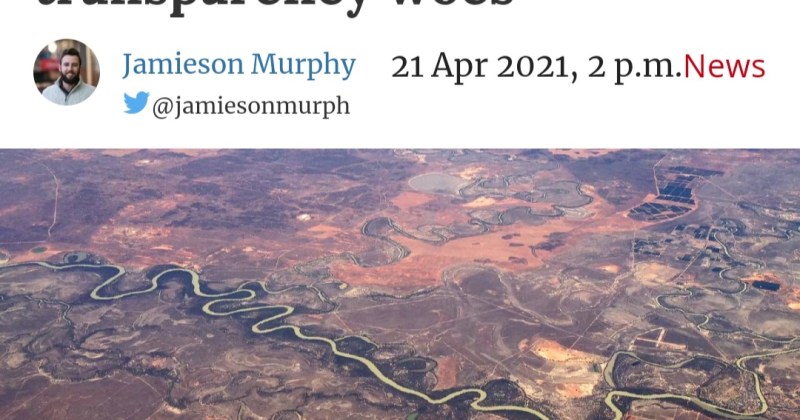
NSW water plan withdrawals highlight transparency woes

Stock Journal, 21 April 2021, Jamieson Murphy

MOST, if not all, of NSW’s 20 water resource plans may have to be withdrawn and resubmitted, and community groups are pointing to the processes as an example of the often cited lack of transparency.

The Murray-Darling Basin Authority has stressed it is all part of the process of ensuring the complex documents tick all the boxes, but stakeholders say the process lacks transparency.

………..

“The lack of transparency around what the problems are and how they’re going to be dealt with, that’s the real problem,” Inland Rivers Network president Beverley Smiles said.

“We’d like to see the reasons why they aren’t being accredited now and what the NSW government will be doing to address those problems.

“The Water Resource Plans are a key part of the implementation of the plan and community has the right to know what’s happening with them.”

Multiple reports into the MDBP have cited a perceived lack of transparency and community’s mistrust in the process.

Read the full article here

Letter to the Editor, Northern Daily Leader: Phil Spark, Tamworth NSW. 8th October 2019

Letter to the Editor, Northern Daily Leader: Phil Spark, Tamworth NSW.

“I agree with Barnaby the government does face annihilation, but not because it hasn’t built dams, rather because it hasn’t acknowledged the climate emergency and is out of touch with people who fear for the future of more frequent and extreme weather events.

People can see that building more dams would be a waste of money, and would only lead to increasing water use and more degradation of river ecosystems.

It is 1950’s thinking that building dams will solve our problems. It is that thinking that got us into this problem; more dams would only be digging us into a deeper hole.

The reason we have a water crisis is because water use is over allocated and there is less of it to go around because the weather is getting hotter and drier. There is not a single drop that is not already committed to providing for agriculture, towns and the environment.

Building dams is not going to make it rain anymore, just further degrade the already dying rivers that are predicted to have a fish armageddon this summer.

The weather we are experiencing is the result of 1 degree of global warming, by some miracle we might halt warming to 1.5 degrees but more likely 2 degrees. The point is this is no natural disaster and we are not going back to normal or average weather conditions for a long time if ever.

This is a new scenario requiring water plans based on the predictions of climate science not based on what is politically acceptable as was the case for Murray Darling plan. The current water crisis clearly demonstrates current use is unsustainable. It is the sign of the end of the era of limitless and unsustainable growth, and a new era requiring innovative ways to keep everyone in a job.

With diminishing water resources comes the potential for increasing conflict. No town or industry can be allowed to increase its water use at the expense of other users; all users will need to do more with less water and work cooperatively to share the limited resource.

The future is going to be very challenging; we need futuristic leaders who up to that challenge and not dinosaurs whose thinking is 50 years out of date, and out of touch with the people who are really worried about climate change.

If they don’t step up the government will face annihilation at the next election.

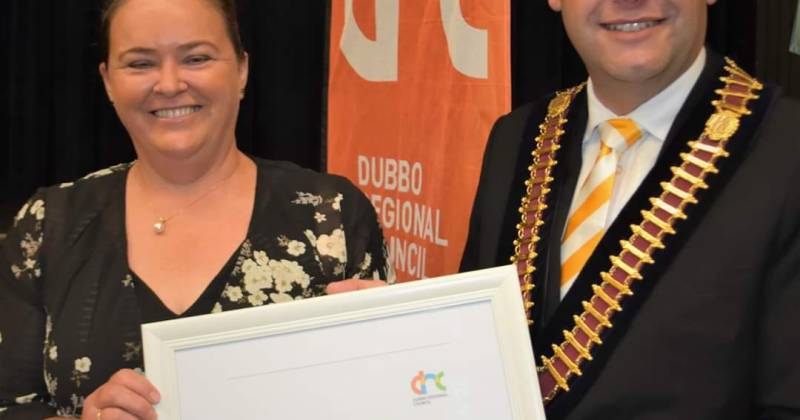
IRN member honoured with Dubbo Day Award for volunteer efforts

Mel Gray, an Inland Rivers Network member based in Dubbo, was honoured with a Dubbo Day Award on Friday 22nd November. Mel has volunteered much of her time since she’s lived in Dubbo to improving the health of the Macquarie River and Marshes through her association with several community groups including Dubbo RiverCare, Western Paddlers NSW and Healthy Rivers Dubbo.

“Mel Gray: Mel has donated much of her time to unpaid work for various community organisations and it is a wonder she has any hours left to do her paid work. Mel is one of the driving forces behind Dubbo Bushcare, now Dubbo RiverCare Group, she has spent years working along local waterways to improve the riverine environment. Mel became a River Ambassador tasked with raising broader public awareness about the fragile nature of Macquarie River and the world heritage listed Macquarie Marshes the river feeds. She is a natural when it comes to forming partnerships with an innate understanding that there is so much to do in the environment yet so little state or federal funding and that groups and organisations need to network and work together, pooling limited resources to create a critical mass which has the power to get things done. A deserving recipient of this award”.

Short-sighted politics threatens untold damage to NSW communities

This week we saw yet another angry outburst from the Deputy Premier, John Barilaro, threatening to “walk away” from the Murray-Darling Basin Plan.

The basin plan is a compromise. It’s not going to be enough to achieve a healthy river, particularly as climate change imposes its footprint across the basin, but it is a fundamentally important first step towards the long-term health of the rivers and the long-term viability of irrigated agriculture.

It would be a tragedy for the long-term recovery of Australia’s largest river system that supports millions of job to be thrown away for the sake of short-sighted politics. Walking away from the plan might be perceived to benefit a few irrigators but it would cause untold damage to all communities throughout the basin.

The Age Short sighted politics threatens untold damage to NSW communities

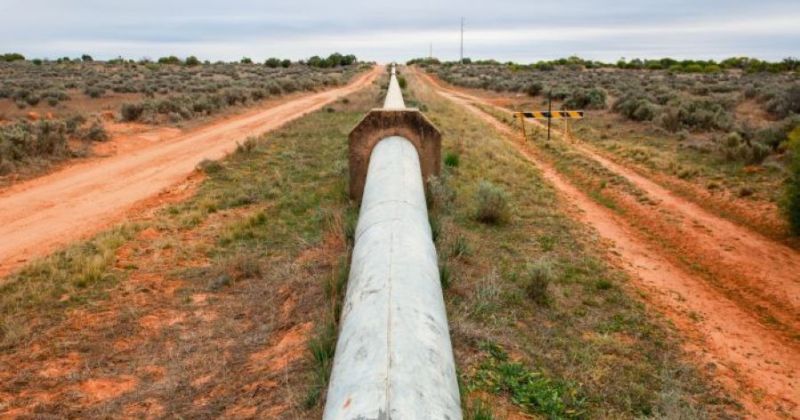
‘Disdain’: Anger as Broken Hill pipe business case finally released

The justification for the $500 million Broken Hill water pipeline prioritised irrigators and all but ignored the environment, according to the project’s business case that has finally been released by the government.

The so-called Final Business Case for the Broken Hill Long-Term Water Supply Solution was handed to independent MP Justin Field after multiple “calls for papers” and requests since its proposal in 2016.

www.smh.com.au anger as Broken Hill pipeline business case finally released

Farm Online NSW’s Broken Hill pipeline leaves Murray Darling high and dry