Recent Submissions: Inland River Network advocates for better water sharing plans in the Namoi, Lachlan, and Macquarie Rivers

Recently the NSW Natural Resource Commission sought public comments on their review pf the Upper Namoi and Lower Namoi Regulated Rivers, the Lachlan Regulated Rivers Water Sharing Plan and the Macquarie and Cudgegong Regulated Rivers Water Sharing Plan.

Go to the to the top menu of our website> Campaigns and click on ‘submissions’ to read our comments on these three water sharing plans.

Upholding water laws, because the government will not!

Media Release

14 November 2017

 Community group takes legal action to enforce water laws because the Coalition government has not

The Inland Rivers Network is taking legal action to force Peter Harris, a big irrigator in the state’s northwest and a Nationals Party donor, to return more than five billion litres of water he took, allegedly illegally, from the Barwon-Darling River. [1]

“It should not fall to community groups to enforce our water laws, but the Berejiklian’s government’s inaction has left the Inland Rivers Network no option,” said Nature Conservation Council CEO Kate Smolski.

Full Details at the EDO NSW website: IRN v Harris and Another
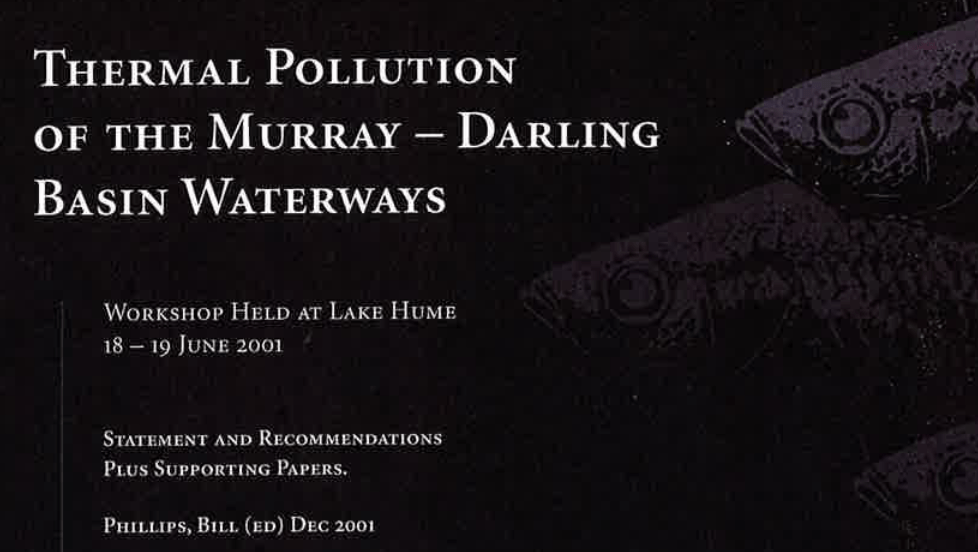
Thermal Pollution of the Murray-Darling Basin Waterways – 2001

The Thermal Pollution Workshop was held at Lake Hume, Albury on 18 – 19 June 2001, and those in attendance represented a broad cross-section of interests, stakeholders and professions. Importantly, the workshop bought together a diversity of expertise from scientists to engineers, professionals in water resources, fisheries and conservation management, and people with first hand experience of the thermal pollution problem.

The Way Forward on Weirs – August 2000

The Way Forward on Weirs was the first conference to address the ecological, engineering, economic and social aspects of reducing the environmental impacts of weirs in Australia. Hosted by the Inland Rivers Network on 18 and 19 August 2000 in Sydney, it was the first large-scale gathering of stakeholders to address the issue. The papers presented here arose from the Conference and address four key themes:
– What are the effects of weirs on the environment?
– How can weir operations be altered to reduce environmental impacts?
– How can weirs be removed or modified? and,
– Thinking laterally about water supply options and management.

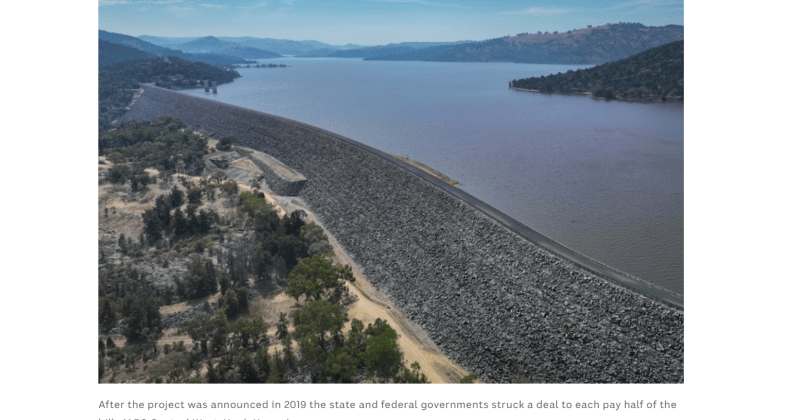
Farmers are frustrated over years of delays for the Wyangala Dam wall raising project

ABC Central West / By Hugh Hogan March 22nd, 2023

Excerpt:

With the state election this weekend, NSW Labor said it needed more details before it could commit to the project.

“We don’t know what it’s going to cost. We don’t know clearly what the benefits are. We don’t know what the environmental impacts are going to be,” Labor water spokesperson Rose Jackson said.

“What Labor is doing is being honest about the processes that we’re going to follow … we haven’t seen the documentation, we haven’t seen the business case so we’re unable to make commitments.”

Environmental concerns

Not everyone is in support of the project which could have a price tag north of $2 billion.

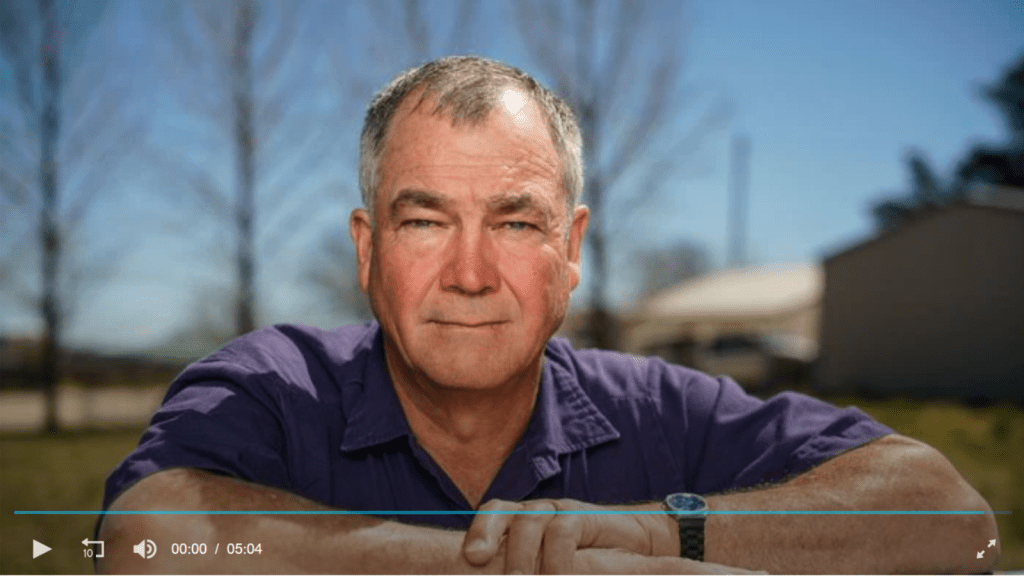
Bev Smiles from the Inland Rivers Network said the environmental cost, including reduced water for wetlands, was too high.

“It captures the really important floods for the wetlands in the Lachlan Valley that are listed on the national list of important wetlands,” she said.

Ms Smiles said a bigger dam would not have had any effect on last year’s floods as operators were currently required to store as much water as possible for downstream users.

“New South Wales really needs to look closely at its dam management policy both for critical human needs in extreme drought … and the way they currently manage dams to keep them full as much as possible,” she said.

Full story here

Water recovery and ‘over recovery’ in the Macquarie valley

The NSW Coalition government and the local fibre growing industry groups are making a controversial claim – that there is too much water in the Commonwealth’s environmental water accounts in the Wambuul/Macquarie and Gwydir catchments.

So how can the claim be made that these rivers are ‘over-recovered’, when the internationally significant wetlands they contain are rapidly declining?

This is a tale of how the convoluted nature of water management, and the deceitful abuse mathematical formulas and data can score you a big payday, if you’re prepared to stoop that low.

If you think it’s ludicrous to suggest that rivers can be too recovered, then please, read on!

Growing calls for water recycling in drought-prone regional cities

ABC News

February 17, 2023

Parts of regional Australia are experiencing a population boom, but there are concerns some of the fast-growing inland cities are ill-equipped for the next drought.

Some of the communities which ran out of water, or came close, at the height of the last drought are growing impatient for solutions and want water recycling to be among the options.

More Information

Featured:

Simon Murray, former mayor, Armidale Regional Council
Graham Carter, Tamworth Water Security Alliance 
Kevin Anderson, Tamworth MP and NSW Water Minister

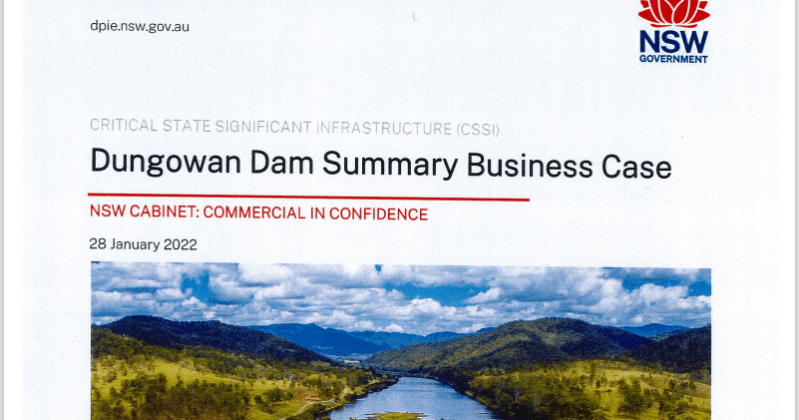
Dungowan Dam Summary Business Case

The proposed Dungowan Dam & Pipeline project is a National Party promise for the electorate of Tamworth. It is economically unviable and has been questioned by Infrastructure NSW and the Federal Productivity Commission.

The summary of the final business case passed by NSW Cabinet in March 2022 demonstrates bias and a lack of analysis of alternative options to secure Tamworth water supply under future climate change predictions.

Darling/Baaka sacrificed for northern irrigators

MEDIA RELEASE
Thursday 11 August 2022

Inland Rivers Network condemns the NSW Coalition Government and the Shooters Fishers
Farmers Party for sacrificing the health of the Darling/Baaka and its dependent communities
through poor regulation of floodplain harvesting in northern NSW.
Spokesperson for Inland Rivers Network, Brian Stevens:
‘The volumes of water handed out in new entitlements to allow the capture of rainfall runoff
before it enters rivers, and the capture of important medium flood flows, will continue the
destruction of the Darling/Baaka River.’
‘The rules gazetted in water sharing plans for the Border Rivers, Gwydir and Macquarie
Valleys allow for 500% accumulation of entitlement access and no triggers to stop access to
rainfall runoff and flood flows until Menindee Lakes are at a critical low level of 195 GL
(billion litres). The disastrous fish kills of 2019/20 occurred when Menindee Lakes held over
300 GL.’
‘The NSW Coalition and the Shooters Fishers Farmers Party have condemned the
Darling/Baaka to longer periods of dry riverbed with stagnant slimy pools. This decline in river
health started when floodplain harvesting exploded upstream during the 1990’s.’
‘The NSW Government has rewarded decades of unsustainable and unregulated water use with
new licences while conducting no assessment of the downstream impacts on Darling/Baaka
communities, native fish populations, groundwater recharge and important wetland areas.’
‘The future of the Darling/Baaka and its important connectivity with the lower Murray through
the Menindee Lakes is now under dire threat.’

Submission Guide – Floodplain harvesting rules for the Barwon-Darling water sharing plan

Submission Guide: Barwon-Darling Floodplain Harvesting (FPH) Rules

Deadline: Friday 8 July 2022

Email: floodplain.harvesting@dpi.nsw.gov.au

Documents available at: https://www.industry.nsw.gov.au/water/plans-programs/healthy-floodplains-project/water-sharing-plan-rules/barwon-darling

Background

The Barwon-Darling River was identified by the Natural Resources Commission as suffering ecological collapse during recent intense drought conditions. The 2012 Barwon-Darling Water Sharing Plan attributed 16.5 GL (gigalitre = 1 billion litres) to FPH extraction. This volume was used in the development of the Murray-Darling Basin Plan. The proposed new entitlements are above this volume. Extraction from the Barwon-Darling has breached the Basin Plan Sustainable Diversion Limit in 2019 and 2020. The proposed management of FPH in the Barwon-Darling must not lock in individual property history of use.

Key Submission Points (use your own words & additional points)

  1. VOLUME: The volume of FPH to be licensed is estimated to be 51.32 GL (or unit shares), as identified in the Community Assistance Report. This differs greatly from the figures used in the modelled scenarios. There is no confidence in the information provided for FPH assessment or proposed entitlement in the Barwon-Darling River.
  2. Do not support that new FPH licenses will keep extraction below the Plan Limit
  3. Do not support the rainfall runoff exemption – this is free water that must be accounted for
  • ACCOUNTING RULES:
  • Do not support 500% carryover – will cause loss of key flood flows for downstream benefits to wetlands, cultural values, groundwater recharge, basic rights, and town water supply.
  • Support annual accounting with no carryover – there is no rationale for this causing larger entitlements other than faulty policy favoring history of use
  • Support that initial allocation is 1 ML unit share or less depending on antecedent conditions
  • Support that annual allocation is 1 ML unit share or less, as above
  • TRADING:
  • Do not support any trading of FPH entitlement – it is likely to cause environmental and cultural damage – this fails to meet the requirements of trading rules
  • FLOODPLAIN WORKS
  • No works in Floodplain Management Plan Zone A and D should be licensed to take FPH
  • No lagoons or natural drought refugia should be licensed to take FPH
  • No FPH works licenses should be granted until all unapproved and floodplain ‘hotspot’ works are removed or modified.
  • ACCESS RULES
  • Support no access under resumption of flow rules – these must be stronger to protect higher end-of-system flows in Barwon-Darling tributaries: Border Rivers, Gwydir, Namoi, Macquarie
  • Strongly object to no FPH access target of below 195 GL in Menindee Lakes until forecast of at least 4,000 ML at Wilcannia. This offers no drought protection and will cause ecological damage. A target of 450 GL in Menindee is needed with higher forecast upstream flows.
  • PROTECTION OF ENVIRONMENTAL WATER: Rules must protect held environmental water inflows from Queensland and NSW northern tributaries.
  • AMENDMENTS: Support strong amendment provisions for all FPH management rules to enable rule changes without triggering compensation

Contact: inlandriversnetwork@gmail.com for more information

Please include name, address and contact details. Identify if you want your submission published or if you want anonymous publication.